
Nevada S.A.V.E. Replaced VINE
Nevada's statewide victim-notification service is now called S.A.V.E. The letters stand for Survivors, Advocates, Victims and Enforcement. The Attorney General announced the switch, and it went live on August 28, 2025. The current entry point is Nevada S.A.V.E.. It runs through the Attorney General's victim-notification program. Why does the name change matter? Plenty of old county pages, help pages, and saved bookmarks still point people toward the retired VINE system. The transition notice had a clear message for anyone using the VINE app: register again in S.A.V.E. An old registration is no guarantee that alerts carried over to the replacement. Follow the prompts on the current service. Search habits die hard, so VINE wording still pops up in searches, but S.A.V.E. is the Nevada service name and registration path now. The service answers one focused question. Does a connected Nevada custody or supervision record show a person now? And can an alert be set for a later change? It is not a statewide arrest ledger. County booking systems still matter. They hold the local record of a recent arrest, with details an alert service may not display. The official S.A.V.E. search screen is where a name or identifier check begins. It connects a person to a custody or supervision record. It does not publish a gallery of booking photos.
Check a Nevada Custody Record
Search one person at a time. Then compare the returned details before acting on a possible match. S.A.V.E. takes a full name, a partial name, or an identifier. Partial-name rules are specific: at least the first three letters of the first name and the first three of the last. Short or misspelled searches can miss a record. Use a fuller spelling whenever it is known. These steps keep a search tied to the right person:
- Open the current Nevada S.A.V.E. search and enter the person's full name, a qualifying partial name, or an identifier.
- Review every result when more than one person appears. Compare the available identity, custody, and supervision details instead of choosing by name alone.
- Read the listed status and agency information as a current connected-system result. It may describe custody or supervision, rather than the instant of arrest.
- If the identity or status is unclear, confirm it with the county or agency that holds the record before relying on the match.
Treat a name match as a lead, nothing more. Common names can pull up several people at once. A county booking entry may also be newer than the statewide notification record. S.A.V.E. states plainly that its data updates periodically and is not an official record, so it points a search rather than replacing the custodian of the arrest record itself.
Note: A result can describe custody or supervision without showing when an arrest occurred or what a court later decided.
What a Nevada S.A.V.E. Result Means
Read a result as a current-status signal. It covers only the systems connected to S.A.V.E. The public pages do not promise a full booking packet or a fixed set of fields for every person. What shows up depends on the agency and the record. Nothing in a result goes beyond the custody information it provides.
| Search question | What S.A.V.E. can indicate | What it does not establish |
|---|---|---|
| Is there a connected record? | A person may appear as currently in custody or under supervision in a participating Nevada system. | A match does not prove that the person was arrested for a specific event or that the entry is a full arrest record. |
| Where is the person in the system? | The result may provide custody or supervision details available from the connected agency. | It is not a complete statewide map of every jail, city hold, federal facility, or immigration system. |
| Did a status change? | A registration can send supported release, transfer, escape, death, or other status notices. | A search result is not a court disposition, warrant search, booking-photo file, or historical archive. |
One quirk is worth knowing. A person can drop off the live search after release, while an earlier registration still stands ready for a future return to custody. A blank result has other causes too. Timing, spelling, a limited connected feed, or a system outside the program can all hide a record. Those limits are exactly why the county record system matters. The question may be a specific arrest or booking, and the county record answers it better.
Register for Nevada Release Alerts
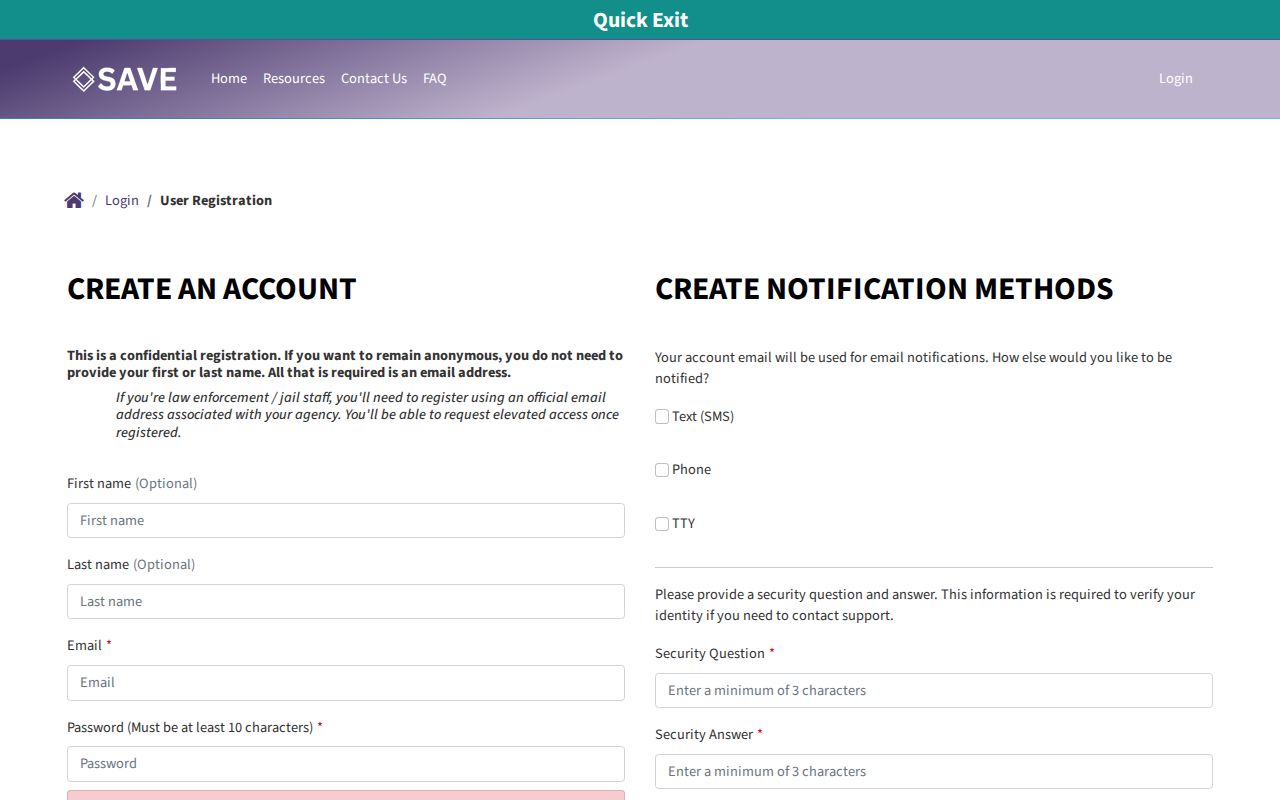
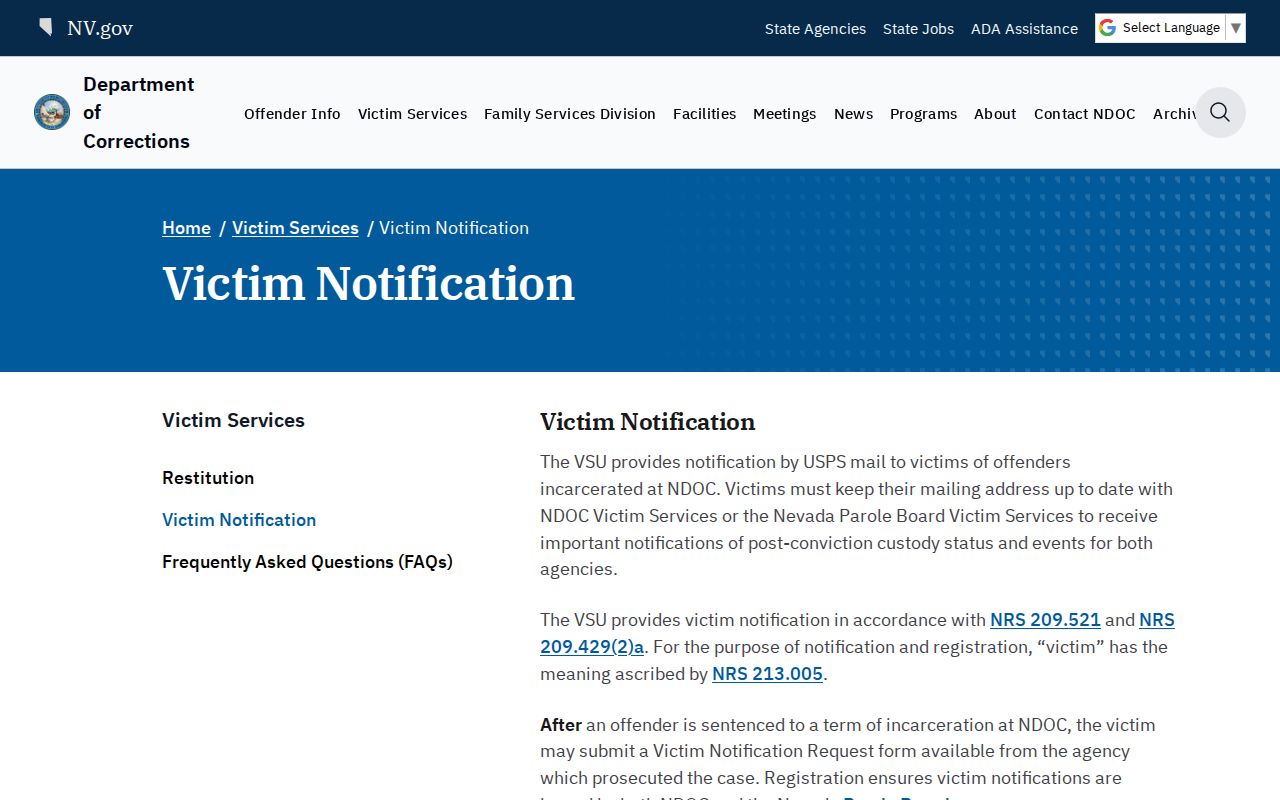
Nevada victim-notification material from the Department of Corrections describes S.A.V.E. registration as free and anonymous. Alerts arrive by automated phone, email, or text. Use the live registration process, since its identity checks and authentication fields can change. Older VINE walkthroughs lean on a PIN. But the current public material makes no promise that those legacy PIN steps still apply. Set up alerts from the current record, then keep the contact route handy:
- Open the current S.A.V.E. registration page and follow the live prompts for identity verification and account setup.
- Choose the person and custody record to follow, then select the alert events offered for that record.
- Add the phone number, email address, or text-capable number where notices should go, and complete any confirmation step shown on screen.
- Review language, accessibility, and blackout preferences before leaving the registration flow. Update contact details if they change.
For current setup fields and alert choices, the registration screen itself is the source. The NDOC victim-notification material describes access in English and Spanish, plus TTY/TTS accommodations. Those options can matter when phone alerts are part of the plan, so check the live instructions rather than an old app walkthrough. The S.A.V.E. registration screen shows the current way to create or update an alert account.
A 24-hour telephone route is listed at 866-393-5445. Email support runs through NVSave@ag.nv.gov. Responses there may take up to three business days. Neither route promises that a new booking appears at once.
Nevada VINE Coverage Is Historical
Nevada's public VINE footprint is now a matter of history. The old VINE participation page once listed every one of the 17 county-equivalents in Nevada. It also named several city systems. It listed the Nevada Department of Corrections, Parole and Probation, and the Parole Board as well. That roster described the earlier VINE deployment, not today's S.A.V.E. setup. Treating it as a live county directory would overstate what the current service publishes.
The Attorney General's transition announcement talks about cooperation across sheriffs and chiefs. It also cites the Department of Corrections, the Department of Public Safety, and the Parole Board. What the current S.A.V.E. pages do not offer is a county-by-county matrix. Nevada administers the system, and custody and supervision partners feed it. No public coverage map spells out each county feed. That is the honest statewide picture.
This gap changes how a missing result should be read. A name that returns nothing does not mean the county sits outside the system. By the same token, the historical participation list cannot promise that a county's arrest and custody records remain searchable. It cannot promise they stay searchable in the same form. Run the live check first. Then take the question to that county's own detention center or records office. The old page explains the past. It is not today's coverage map.
Note: Historical participation gives context for the transition, but the live public pages do not confirm every county's current feed status.
How Nevada Transfer Alerts Follow Custody
A single booking is rarely the whole story. After an arrest, a person can move between participating agencies. A person can also shift from custody into supervision. The NDOC victim-notification information describes registration that follows those custody and supervision transfers across connected Nevada systems. Notices can cover release, transfer, escape, death, and other status events. What arrives depends on the data each agency feeds in. No alert type is a promise that every change triggers a message.
Blackout dates serve a simple purpose. They quiet routine alerts during a stretch when messages are not wanted. Release alerts are the exception. NDOC describes them as still going out despite a blackout setting. Read the current preference text before saving any schedule. A blackout changes neither agency reporting nor every message type.
Transfer tracking also explains a common puzzle. A current-status search and a saved registration can appear to disagree. Someone who has left custody may drop out of a live search. Meanwhile, an old registration stays active, waiting for a return to custody. When an alert raises a time-sensitive question, confirm status directly with the holding agency.
Limits of a Nevada Arrest Check
S.A.V.E. updates its data on a cycle. A fresh Nevada arrest may not appear right away. The system reflects custody and supervision, not the moment of arrest itself. Someone already released may not show up. A federal or immigration hold can sit outside the connected Nevada systems. It is also no booking archive, photo database, warrant search, or court case lookup.
Start with the official custody source. It belongs to the county or city that handled the booking. No result? Try a fuller spelling of the name. Then ask the county records office or detention agency which record system covers that booking. An older booking that has left the live roster may require a public-record request.
The Arrested Today page explains how Nevada's verified same-day products differ from current-custody searches. For a statewide set, start with Nevada recent arrests. It covers official county booking and photo sources. Confirm what you find with the agency that holds the record. A custody alert can report a release or a transfer. It says nothing about court outcomes. Charges filed later, along with the final disposition, live in the court record. The county or agency record settles the booking itself.
Note: A statewide alert can help track custody changes, but the arresting agency remains the source for a booking record and its corrections.