
Are Nevada Arrest Records Public?
Yes and no. Some Nevada arrest information is open to inspection or copy, yet no rule forces every record or booking photo into public view. What you get depends on the record type, the agency keeping it, any confidentiality statute, and whether a judge has sealed it. NRS Chapter 239 opens public books and records broadly unless another law closes them. Criminal history, juvenile material, and sealed cases each follow separate rules. Asking the agency directly is the surest way to learn whether a specific item exists and what may be released.
A booking record simply documents an arrest and intake. It proves nothing more. A custody page can vanish the moment someone walks out of jail, even while the agency still holds a report or register entry. Private sites keep copies too. That does not make them the official custodian.
Nevada Arrest Law Has Four Layers
Nevada's rules get simpler once you keep four chapters apart. NRS Chapter 179A covers criminal-history records kept by the Central Repository and criminal-justice agencies. Under it, criminal history includes specified arrests, charges, dispositions, fingerprints, and biometric identifiers. A booking photo counts as a biometric identifier. The chapter lists who may share covered information. But it never declares every record public. Nor does it hand private publishers an agency's role. NRS 179A.140 also permits a reasonable fee for certain Repository transactions.
The other layers answer different questions. Chapter 239 governs access to government records. Chapter 62H shields juvenile justice records. It also limits use of a child's name, photo, and case details. Chapter 179 offers adult sealing routes. It spells out what follows a sealing order. A sealed record is restricted by law. It is not merely an old web page that fell out of search results. Before trusting a label like "public," identify the record and its custodian.
The Nevada public-records statute is the starting point for an agency request and its response duties.
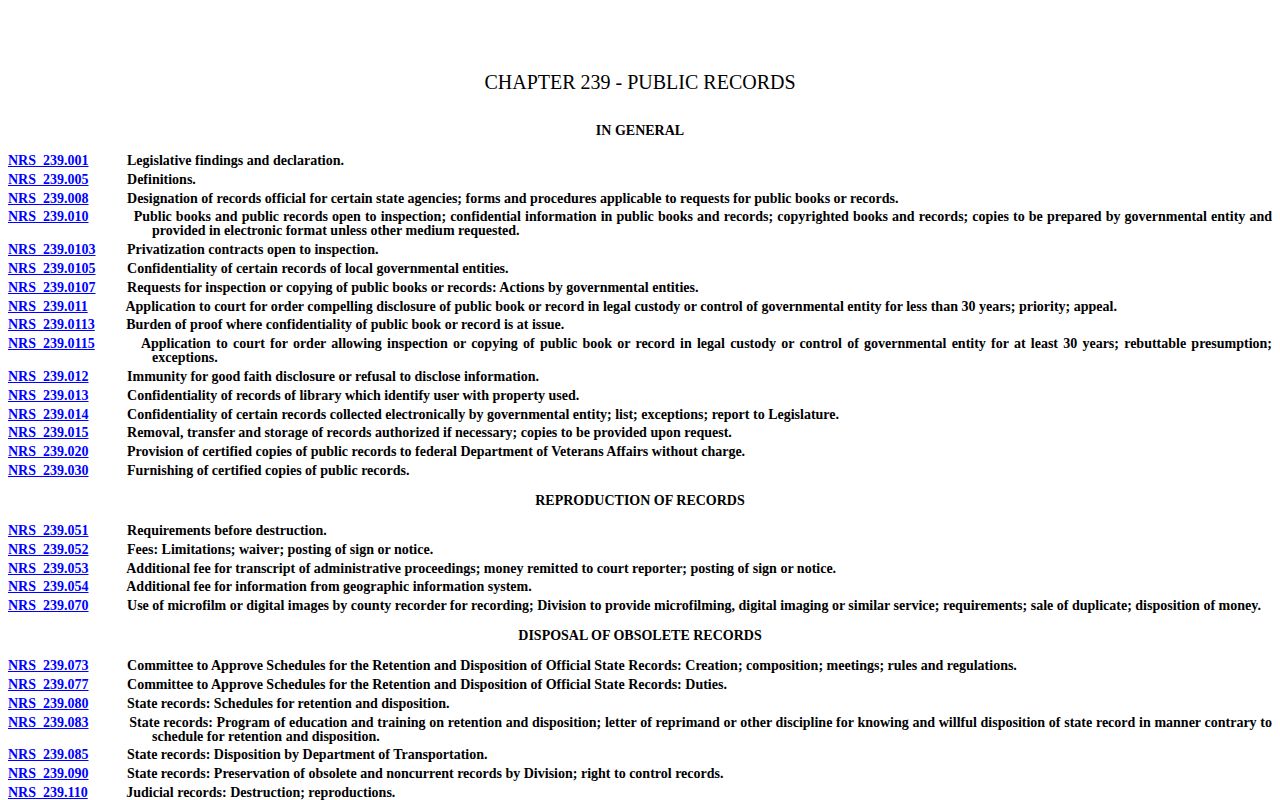
The statute sets a strong access policy with room carved out for specific legal limits. It never converts a private republication into an agency record request.
Requesting Nevada Arrest Records
Address the request to whoever holds the item. That may be the arresting police department, a sheriff, a jail, or a state agency. Name a record, not just "everything." Include the incident or booking date or range, the place, a name if known, and the record type. State whether you want inspection or a copy, and name the format if it matters.
NRS 239.0107 sets the clock. By the end of the fifth business day, the entity must allow inspection or copying, provide a copy, say it lacks custody, or explain a delay with the earliest date and time access can happen. The entity must also help narrow the request. Any denial must cite law. Under NRS 239.052, fees generally track actual costs unless another statute applies, and NRS 239.055 covers extraordinary use plus a page-fee ceiling. No single flat price exists statewide.
- Identify the agency that made the arrest or holds the booking file.
- Give a date range, location, name if known, and a specific record type.
- State whether inspection, an electronic copy, or another format is preferred.
- If access is denied or delayed, ask for the legal basis and consider the court remedy in NRS 239.011.
NRS 239.051 keeps records-management duties alive regardless. A request never excuses destroying a record a schedule requires the agency to keep. If an agency lacks custody, ask which public body has it; that answer does not disprove an arrest.
Note: A request may produce a redacted report, a record without a photo, or a finding that a different agency holds the item.
When Nevada Arrest Records Stay Private
Juvenile material gets the strongest protection. NRS Chapter 62H limits when a child in custody can be fingerprinted or photographed. It also limits how those items may be used. It generally bars media publication of a child's name, race, or charges without a juvenile court order. Certain statutory exceptions apply. Juvenile justice information and juvenile court records are restricted as well. A name or image on an unofficial page proves nothing about lawful disclosure. No child's identity should be repeated from such a source.
Other records can be withheld or partly redacted. Reasons range from an active investigation to a protected victim or witness. Others include medical details, a shielded address, security concerns, or a court order. Nevada's public-records rule does not compel it. Other parts being public is not enough. Ask for a segregable copy with private material removed. Ask also for the exact legal ground behind any withheld piece.
Chapter 62H adds a petition route for some people under 21. It also sets automatic sealing at 18 with exceptions, plus a later expungement process.
The juvenile records chapter describes protections for youth names, photos, and case information.
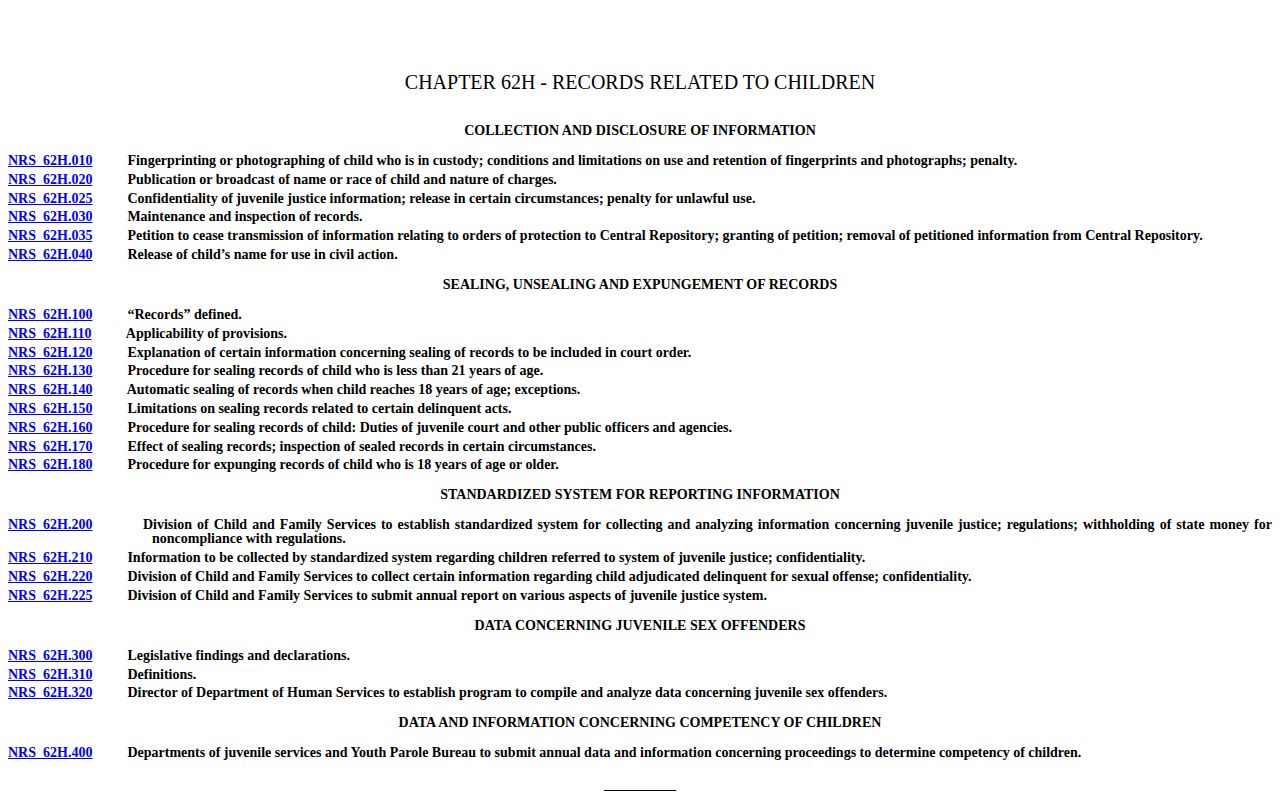
Those limits hold even when an adult system pulls up a matching arrest record nearby.
Age and legal status still must be confirmed through the agency that holds the record.
Official Paths for Nevada Arrest Records
Custody data, court status, and criminal-history files live in separate systems.
Nevada has no statewide same-day jail roster or unified trial-court search.
Match your question to the right source, confirm with its custodian, and use the County Directory to reach local systems.
| Record path | What it can show | What it does not settle |
|---|---|---|
| County or city custody portal | People currently held and fields the local agency chooses to display. | It may not retain released people or show a full report. |
| Agency records unit | Records held by the arresting or booking agency, subject to law and redaction. | A request cannot require an agency to create a new record. |
| Court case system | Filed charges, hearings, and a court disposition within that court's scope. | There is no one trial-court portal for every Nevada court. |
| Central Repository | Criminal-history information shared under Chapter 179A. | It is not a live jail roster or a universal public photo search. |
| NDOC offender search | State-prison custody and offender records. | It does not cover every fresh arrest or county-jail booking. |
Counties differ in how they display booking photos.
The statewide hub's photo landscape lays out those differences. Court dockets show outcomes, booking sources document arrest and intake, and if an online entry vanishes, ask the agency whether it still holds the record before assuming destruction.
No Nevada Mugshot Statute Located
Nevada statutes contain no booking-photo publication rule and no anti-pay-to-remove law on this subject.
That gap is real, but it is narrow. It speaks only to the statutes themselves, not to what future legislatures might do. NRS 179A governs criminal-history dissemination, while Chapter 239 governs government records. Neither one builds a state-run mugshot gallery. Neither says every private site may republish every photo. Agency disclosure and private republication stay legally distinct. NRS 179A.100 names news-media reporters among permitted recipients for specified dissemination. That is not a blanket commercial license. NRS 179A.110 confines use to the purpose for which the information was provided. Some exceptions apply. No Nevada court or agency ruling on state-specific publication or removal charges appears in the authoritative sources for this subject.
Do not fill the gap with another state's law.
A lawful agency release settles nothing about a private publisher's correction policy.
Nevada Arrest Record Sealing Waits
Nevada's adult record relief is called sealing. A court order limits access. But it does not erase every old copy, news story, or search cache. For convictions, NRS 179.245 sets waiting periods. They are tied to the offense and its legal category. The shorthand: ten years for a category A felony, a crime of violence, or residential burglary. Category B, C, and D felonies wait five years. A category E felony and many gross misdemeanors wait two, specified DUI or domestic-violence matters wait seven, listed battery, harassment, stalking, and protection-order misdemeanors wait two, and other misdemeanors wait one.
These shorthand periods are not an eligibility test. Statutory exclusions and offense-specific conditions matter. NRS 179.2405 states a second-chance policy. NRS 179.2445 creates a rebuttable presumption when requirements are met.
Time or release alone does not seal an adult record. Automatic adult relief is limited, including pardons under NRS 179.273. Dismissals, acquittals, and declined prosecutions follow a separate route under NRS 179.255. A favorable result may not update repository files.
Under NRS 179A.160, an eligible person applies to the Central Repository and the agency. That removes eligible files from dissemination and general search. Exceptions cover fugitive status, active prosecution, deferred-prosecution or plea conditions, and some prior convictions. Court self-help forms and RCCD sealing information describe process resources, not a guarantee of relief.
The Chapter 179 text is the controlling source for offense-specific waiting periods and court orders.
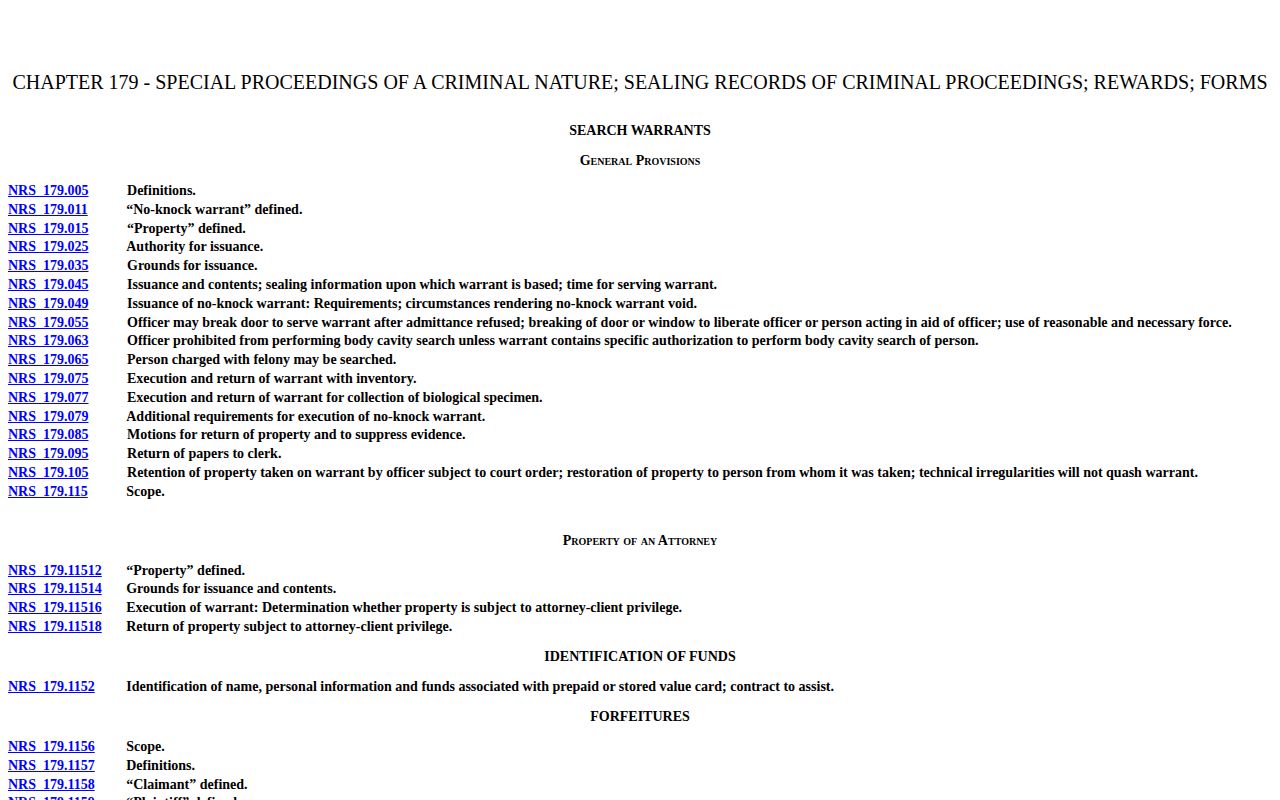
People often say "expungement."
Nevada's adult process is usually a petition to seal, with its own defined legal effects and limits.
Court Sealing Can Reach Named Private Custodians
Under NRS 179.275, a sealing order goes to the Central Repository and to each public or private custodian named in it. Named custodians must seal the record and report compliance. A seal still does not reach every copy. That can reach a publisher holding the same material, but only if the order names it. Send the order to each named publisher and follow its correction route.
Cached snippets can linger. Google's outdated-content tool can request a refresh once a source changes. It cannot amend the official record or guarantee removal everywhere.
Note: Keep proof of delivery and each custodian's response, since the court order and the separate compliance steps serve different purposes.
Nevada Retention Creates Different Record Timelines
Retention says how long a government office must keep a record. It does not say how long a public website displays it. The Nevada state retention schedule dated 2016 lists separate periods. They cover a jail register, release orders, a roster, and an inmate file.
A jail register is kept five years from the register date. Release orders are kept three years from release. An inmate roster is kept 90 days after a roster update. Inmate files are listed for 85 years or five years after confirmed death, with historical-value review before disposition. County-equivalent offices may use another schedule. Retention never guarantees public access. Ask the records officer which version controls.
A roster can expire while a register or inmate file remains. A private copy is not a current government display. The Nevada State Administrative Manual's June 2025 guidance says sealed records are not disposed of under an ordinary schedule. They need a court order for destruction. A secondary guide covers Nevada State Prison case files from 1863 through 1972, not every surviving or digitized file or photo. The State Records Services page is the official archive starting point.
The Nevada State Records Services page routes requests for state records and archival help.
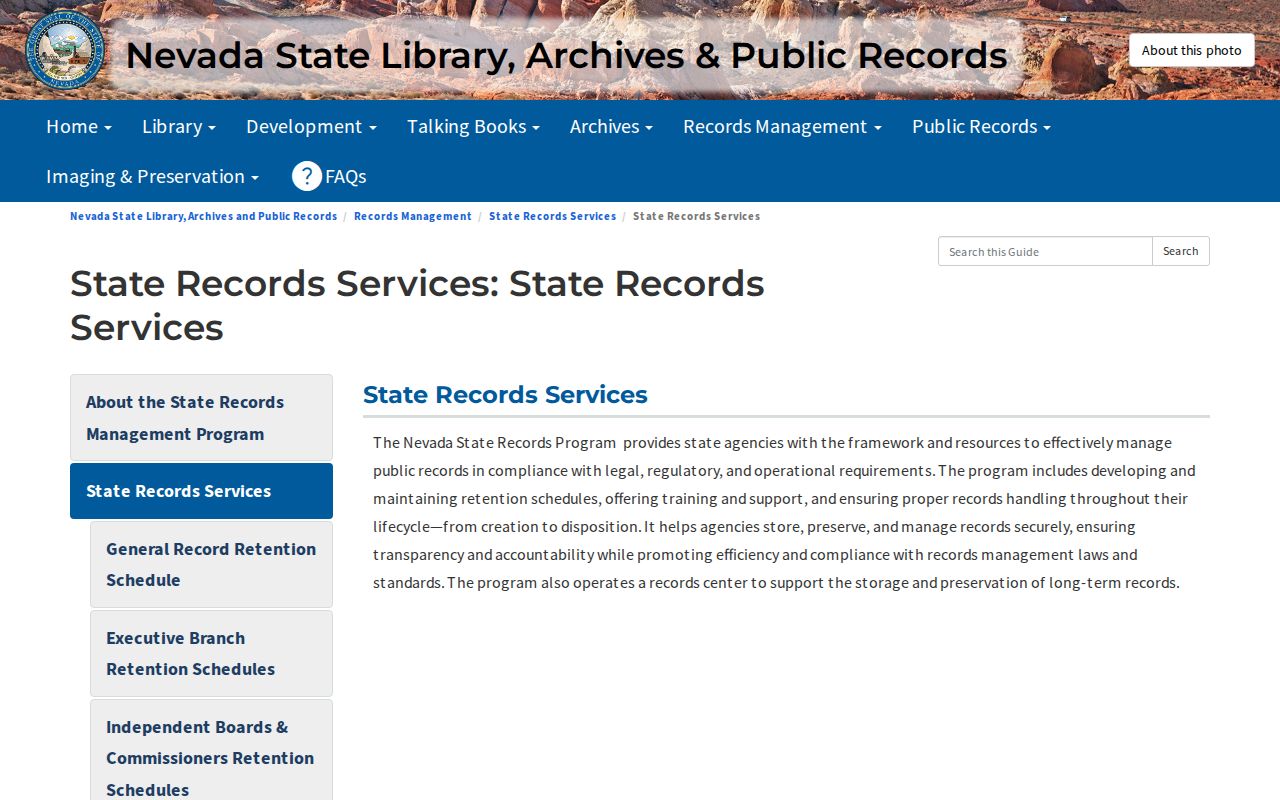
Archives can support historical research, but Nevada offers no official, searchable statewide archive of county booking photos.
Note: The 2016 retention schedule is a dated reference; ask the current records officer which adopted schedule governs a specific file.
Free Opt-Outs and Scam Signs
The route depends on who holds the copy.
A court order, a repository application, an agency correction, and a private policy are four different things.
RecentlyBooked and Mugshots.com describe free routes, but their terms can change and are not Nevada law, so identify the page and send supporting documents.
The RecentlyBooked policy page describes its own no-fee correction and removal request process.
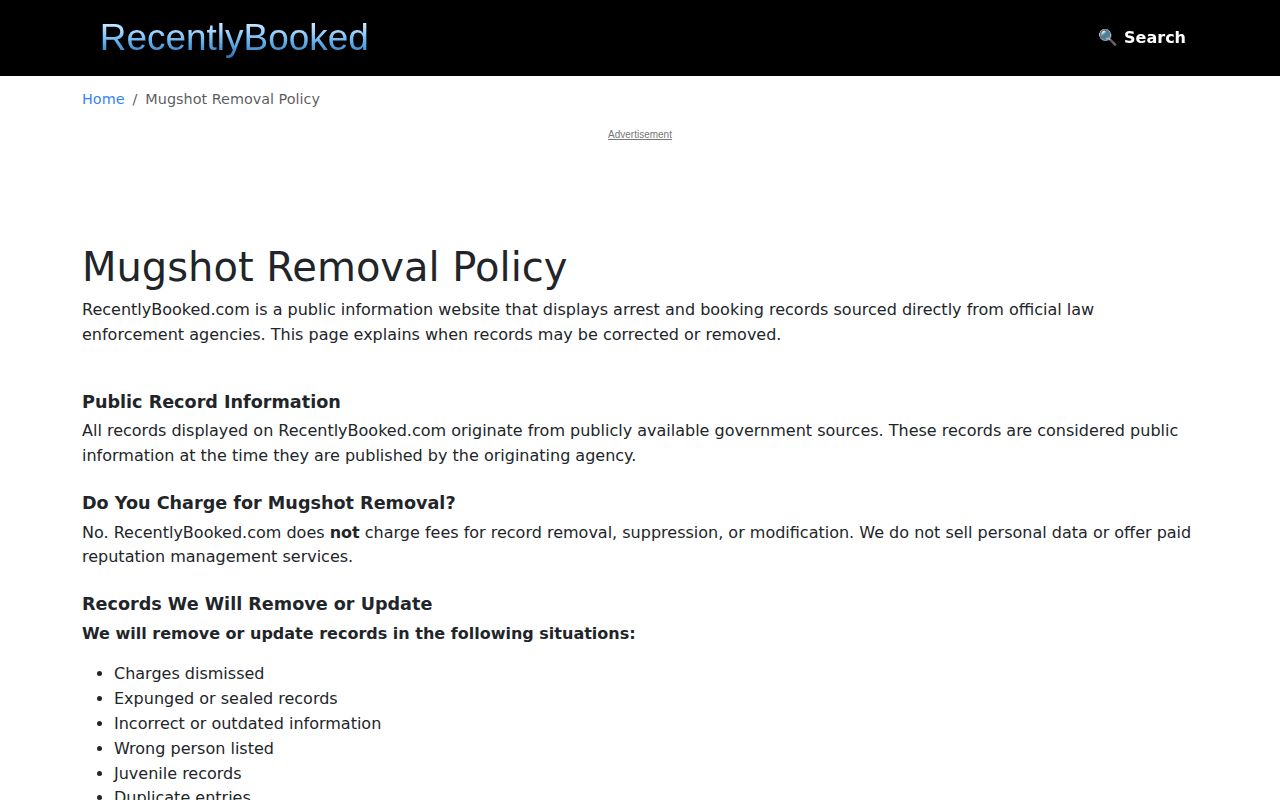
An eligible opt-out request starts with a few basics. Include the record URL, your name, the arrest date, the state and county, your reason, and any supporting legal documents.
| Route | What it can change | Limit to keep in mind |
|---|---|---|
| Favorable-disposition application | Eligible repository and agency dissemination files. | Exceptions apply; no private-site takedown. |
| Adult sealing order | Records held by custodians named in the order. | Eligibility and waits vary by case. |
| RecentlyBooked policy | Free requests for qualifying dismissed, sealed, wrong-person, outdated, juvenile, or duplicate pages. | Publisher policy only. |
| Mugshots.com policy | Free requests for sealing, expungement, identity theft, death, or legal restrictions. | Policy can change; says up to ten business days. |
| Search index refresh | May refresh results after source changes. | Does not change agency files or reach every copy. |
Mugshots.com's Record Maintenance policy lays out a free removal process. Its terms can change. No third party can scrub every court file, agency schedule, news archive, and mirror at once. Skip anyone charging upfront fees for a guaranteed purge. Check with the official custodian, then contact the publisher directly.
Note: A free policy request may still require proof, and a publisher's response does not replace an agency correction or court order.