
Nevada Recent Bookings Statewide
Nevada has no single state-run arrest list. Booking systems belong to the county or city agency with custody. Each agency decides what its public portal shows. Someone can be arrested by Nevada State Police Highway Patrol and booked into the local detention system for that place. The local record is still the right starting point. State notification does not change where the booking lives.
Most public tools answer a narrow question. A live inmate search describes current custody. A dated recap covers a set time span. A press release picks events for public notice. None of these is a statewide arrest count. A blank result can mean delay, release, transfer, a system gap, or a name mismatch. The court record tells the later story.
Note: Check the county where the arrest occurred first, then confirm custody or case status with the agency that holds that record.
Where Nevada Arrests Are Posted
Official sources come first. They hold the custody record or the case record. Nevada's counties share no single feed and no single photo rule. A statewide arrest search is therefore a route through local systems, and the County Directory points to the county site where the booking happened.
| Channel | Photo? | Official? | How to use it |
|---|---|---|---|
| County or city custody search | Varies; often no photo guarantee | Yes | Open the local agency route through the County Directory. |
| Official dated recap | Varies by product and policy | Yes, where published | Use only if the agency defines the date window; Washoe’s documented recap is historical. |
| NHP Media | Selected releases may include scene or agency images | Yes | Read as selected news, not a full booking list. |
| Court record | Usually not a booking photo source | Yes | Use the court tied to the arrest location for filed charges and disposition. |
| Private index or news report | May republish a photo or use a different image | No | Use only as a lead, then verify with the official record holder. |
Nevada State Police Highway Patrol posts selected public-safety and enforcement news. It is not a statewide jail roster. Local publishers and private indexes may repeat booking details. When accuracy or current status matters, the arresting agency or the court remains the source to check, since a lawful government release does not make a private repost official.
Nevada County Booking Feeds
Public booking views differ in time span and purpose. Washoe offers the clearest same-day product. Its media recap uses a midnight-to-midnight booking window, counts added charges in that window, and publishes the next morning. The county lists no stable archive of that recap. Washoe's official inmate search is a current-custody check, not a promise that every arrest from the last 24 hours appears.
Clark County and the Las Vegas-area city systems run useful custody searches. None of them advertises a complete dated 24-hour feed. Henderson and North Las Vegas use separate systems. Carson City offers an official-linked inmate route. Douglas County's jail page calls its web list forthcoming and points to an application. Nye's app endpoint reports a temporary migration outage. White Pine's public custody view claims no 24-hour completeness window.
| Window or record | Nevada pattern | Best use |
|---|---|---|
| Same-day recap | One documented Washoe product used a 0000–2400 window and next-morning print workflow; a current stable archive was not verified. | Use Arrested Today for same-day limits and routes. |
| Current custody | County and city portals cover people shown in custody when the portal refreshes. | Check the arrest county’s official system; a released person may no longer appear. |
| Multi-day news or blotter | Local coverage groups selected incidents and may post after the arrest date. | See Arrest Reports for the statewide blotter landscape. |
| Older government record | A request may reach a register or retained file after a web page expires. | Ask the holding agency about records and retention. |
For the same-day picture, see Arrested Today; Arrest Reports covers the broader county blotter and archive landscape. The two windows answer different questions. A custody search can miss someone already released. A news roundup may run well after the arrest date itself.
Note: A current inmate portal should not be described as a 24-hour arrest list unless the agency defines and supports that window.
How to Search Nevada Arrests
Start with the place, not a photo site. Photos come later. City police arrests usually go into the receiving county or municipal detention system, while a highway patrol arrest lands in the local system for that jurisdiction. Unsure which agency did the booking? Pick the county in the directory, then compare its official custody route with the agency that announced the arrest.
| Search field | Where it may help | Important limit |
|---|---|---|
| Full or partial name | Custody and notification search forms | Common names can return more than one person; confirm details with the agency. |
| Booking number | A jail custody record when that field is offered | Identifiers from different agencies are not interchangeable. |
| Arrest or booking date | Records requests and dated recaps | Event date, booking date, and news date may differ. |
| County or arresting agency | Routing to the correct custody system | NHP or another arresting agency may not hold the jail record. |
Portal fields vary across Nevada. Some show current custody only. A news page may sort by story date rather than booking date, and a missing form field never means the arrest record is missing.
- Identify the city or county where the arrest was made and open its official local route.
- Search the local custody tool by name or record number if those fields are available; check spellings and possible aliases.
- For a very recent event, compare the current custody view with a dated same-day product where the county has one. Do not treat an undated roster as a 24-hour list.
- For a wider period, check the county blotter or selected news archive, keeping the article date separate from the arrest date.
- For one person’s custody alerts, use the VINE Arrest Check page for Nevada S.A.V.E. registration and limits.
- If the online route is blank or too narrow, ask the agency records unit for the booking or incident record.
Does a blank result prove there was no arrest? No. A fresh booking may not be processed yet. The person may have been released or transferred, or the tool may not cover that agency at all.
Nevada DPS Wanted Notices
Nevada DPS runs an official Most Wanted page. It collects selected investigations and cold-case material. It is not a statewide warrant database. An empty list does not mean no warrant exists. Follow the agency's current notice and attribution before acting.
The DPS wanted page is the public entry point and its category page, not a photo gallery of people. Confirm any notice with the responsible agency.
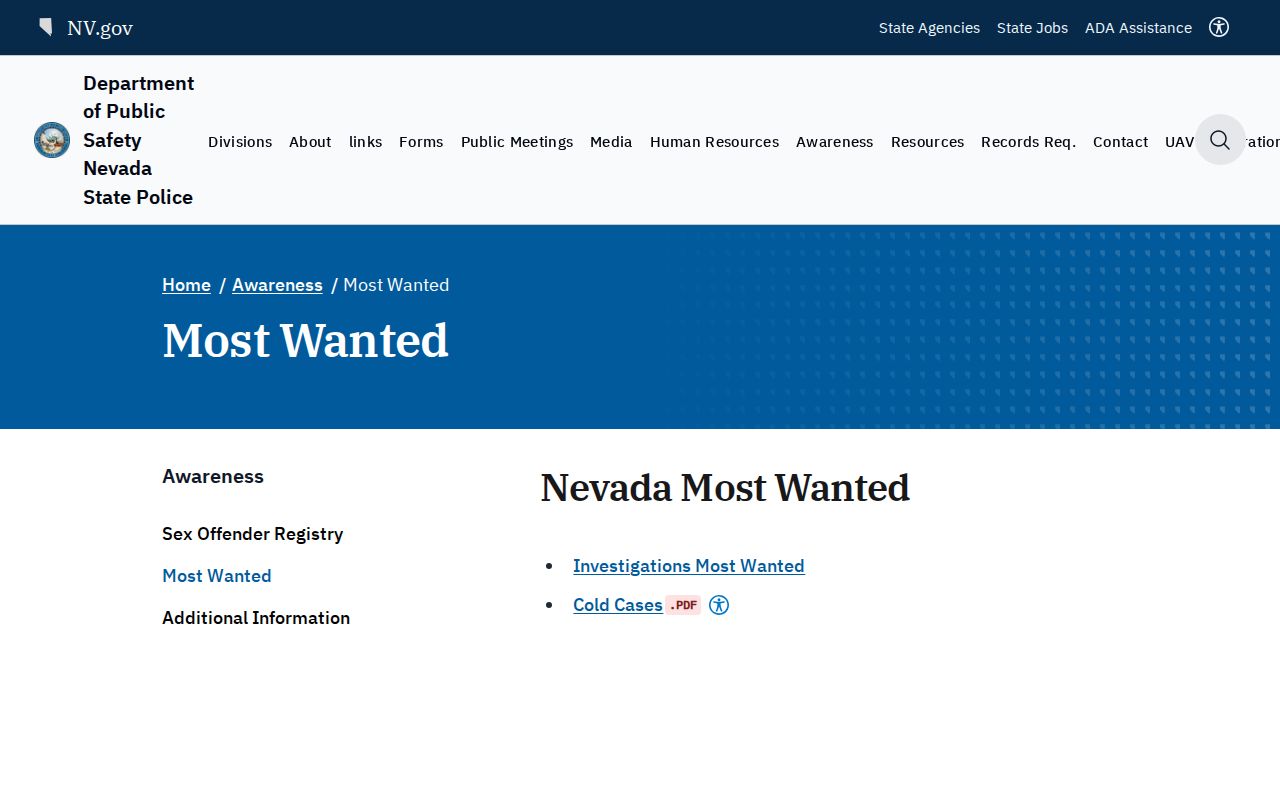
The state list can point you to the agency behind a notice. It cannot tell you who was newly booked into a county jail. It is no substitute for a direct custody check.
A safe warrant check starts with sorting the question. An investigative wanted notice, a supervision warrant, a court warrant, and a fresh arrest are different records. Use this order:
- Choose the right public source: DPS for selected state notices, Parole and Probation for supervision fugitives, or the U.S. Marshals for federal notices.
- Read the issuing agency, notice date, and contact route. A public list can be incomplete or no longer current.
- For a county or city warrant question, contact the court or law-enforcement agency that issued it through the local directory.
- If a notice appears to match someone, do not approach them. Use the agency’s tip route for safety information and get legal advice about a response.
Parole Warrants and Fugitive Notices
The division runs its own wanted-fugitive section. It is Nevada State Police Parole and Probation, and it covers people sought in connection with supervision. Its Warrants and Extraditions Unit tracks down parole and probation fugitives. The unit also handles NCIC and CJIS work. That work sits behind those records. The public list can sit empty for a while between updates. An empty list does not clear anyone of a warrant. Never approach a person on a notice. Call the agency or law enforcement instead if a notice raises a safety concern. The agency’s Parole and Probation home page is the official route to its fugitive notices and unit details. The image shows that agency site rather than an independent booking list.
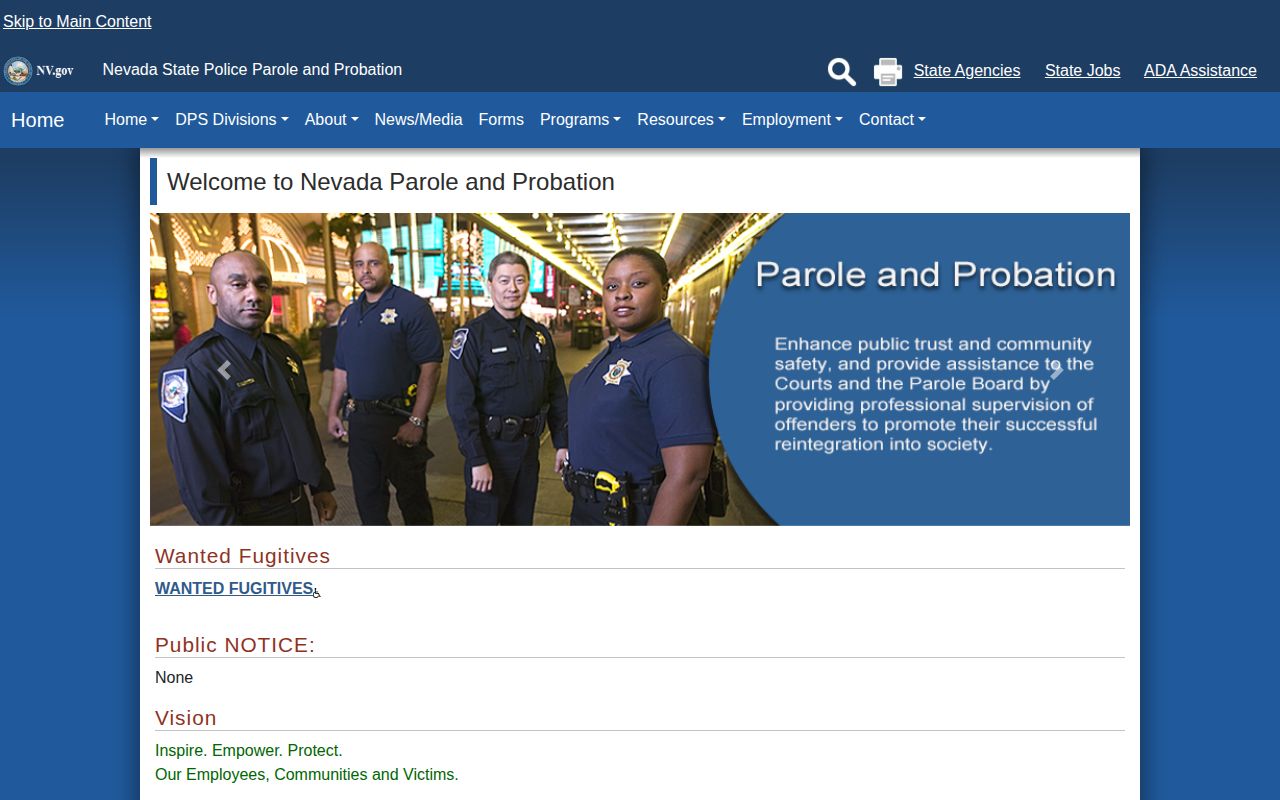
For a named case, confirm status with the agency or court that holds the record. A supervision warrant, a local arrest warrant, and a new booking are three different records kept by three different offices.
Federal Fugitive Notices and Safety
The U.S. Marshals Service District of Nevada posts federal fugitive information and describes its joint task-force work. Start with the district page for federal public notices. Its profiled-fugitives list is a selected set of names. It is not a Nevada county warrant search. The U.S. Marshals District of Nevada page carries the agency details. The screenshot shows the district route and map, not a booking-photo gallery.
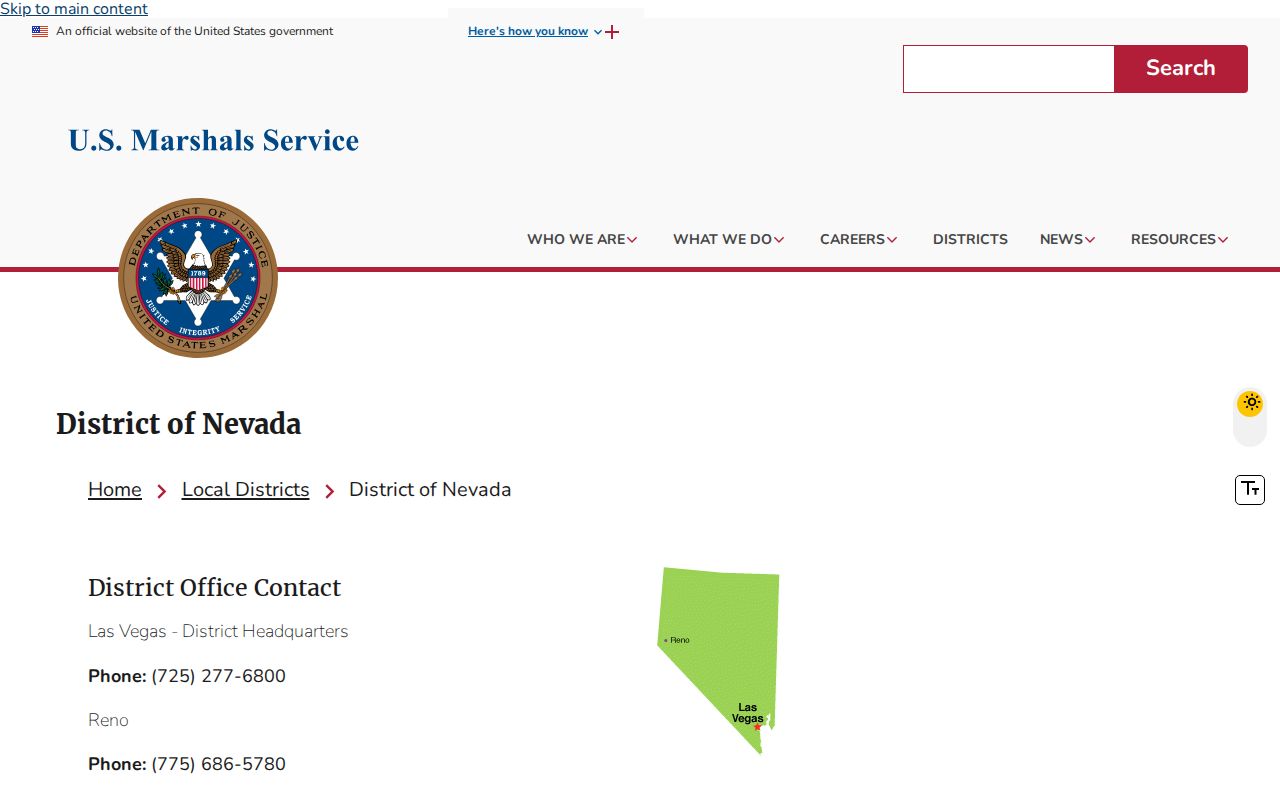
Never follow, approach, or confront a wanted person. For immediate danger, call 911. Send information through the official tip route instead, and take county warrant questions to the issuing court or agency, where a lawyer can explain how to respond safely.
Note: A public fugitive notice is a safety alert, not evidence that a person has been convicted of the listed conduct.
What the Nevada Booking Record Shows
Every county booking file starts with an arrest or detention event. What it contains depends on the agency. It also depends on what public record the law allows it to release. Nevada’s criminal-history statutes cast a wide net. They cover arrest, charge, disposition, fingerprint, and biometric information. A booking photo can sit in an agency file without ever reaching a public roster. Name the exact record you want when you request it. Assume no single public screen holds the whole file.
| Record field | What it can show |
|---|---|
| Name and identifiers | Helps distinguish people with similar names; a match still needs confirmation. |
| Booking or arrest event | The date, arresting agency, and event description held by that custodian. |
| Booking charges | The charges recorded at intake, which may later change or end. |
| Custody status | Whether the person is shown as held, released, or transferred when the system updates. |
| Photo or biometric item | A booking image or identifier if retained and legally releasable; web display is not guaranteed. |
| Court result | Case number, filed charge, hearing, or disposition in a court record, not a jail roster. |
These categories are worth requesting, not a promise that every Nevada county prints each field on its public page. A court disposition is the later case outcome. The booking charge alone cannot show whether a case ended in dismissal, a reduction, or a plea or trial.
| Record stage | What it means | What it does not prove |
|---|---|---|
| Booked or held | A person was processed or is shown in a custody system. | It is not a conviction or final case result. |
| Released or transferred | The person left that facility or moved to another custodian. | It does not erase the booking record or settle the charge. |
| Sentenced to state prison | The later custody record belongs to a separate state system. | It is not a current county jail booking search. |
| Court disposition | The court record shows a later outcome in the case. | It is not the same as a roster’s custody status. |
- Booking
- Processing after arrest or detention, including identity and custody steps.
- Arraignment
- A court hearing where the case and formal charges are addressed.
- Bond
- A court-set condition or amount tied to release while a case proceeds.
- Disposition
- The court’s recorded outcome, such as dismissal, plea, trial result, or sentence.
- Expungement or sealing
- A legal process that limits access to specified records under Nevada law; it is not automatic deletion of every private copy.
How to Request Nevada Arrest Records
A live search can come back blank or thin. Then go to the agency that created or keeps the record. Nevada’s public-record law opens public books and records. Another law can make the material confidential. A county request goes to the sheriff, police, or detention records unit involved. The County Directory routes you to each local system. Nevada DPS runs its own request process, separate from any county booking request.
- Identify the likely holding agency and give the person’s name, arrest or booking date range, place, and incident details if known.
- Name the item: booking record, arrest report, booking image, release record, or a specified case document. Ask for inspection first if the record is not clear.
- State the preferred format and delivery method. For Nevada DPS, the public-records page links an online request portal and a paper route.
- If some material is withheld, ask for the part that can be released and for the specific law supporting any denial.
- Track the response. NRS 239.0107 sets a fifth-business-day response step; it does not guarantee a complex record will be completed by then.
The Nevada DPS public-records form asks for contact details, a description of the record, the date or range, and your preference for inspection or copy, format, and delivery. Fees generally track actual cost. A request that takes more than two hours of staff time can trigger an extraordinary charge. County copy costs and processing routes vary. Check the agency’s current instructions before you submit.
Nevada Mugshot Rules and Limits
Nevada has no statute titled a mugshot-publication law. Nor is there a mugshot anti-pay-to-remove law. The closest rules on the books are four. They include the criminal-history dissemination law, the public-records law, juvenile confidentiality provisions, and the sealing statutes. NRS Chapter 179A treats a booking image as a biometric identifier. It also defines criminal-history material in broad terms. Those definitions do not make every file public in every setting. Nor do they turn a private repost into an official record. The official NRS Chapter 179A index shown here helps with one task. It separates the actual criminal-history provisions from the broad claim that every Nevada mugshot must be public.
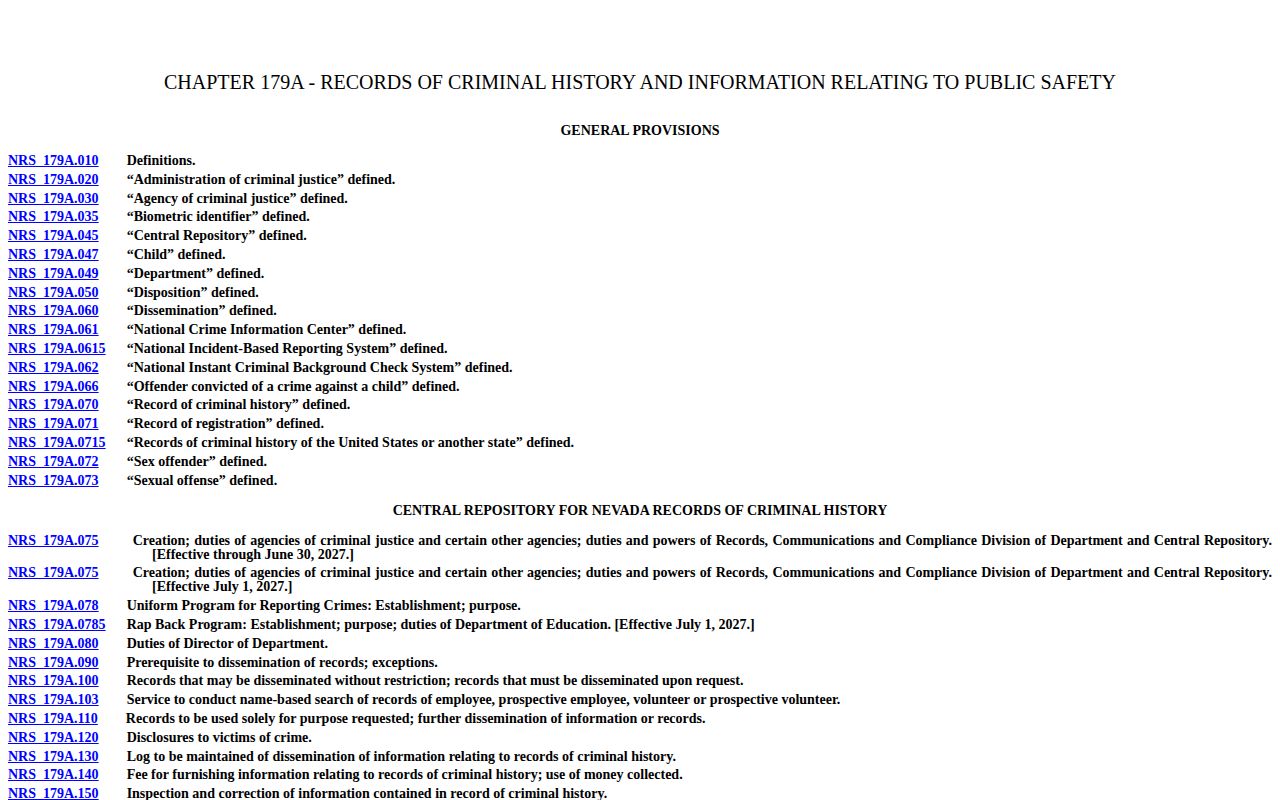
NRS 239.010 generally opens public records. Another law can still make them confidential. Juvenile, victim, medical, security, investigative, and sealed information can be withheld or redacted. NRS 200.785 covers demands for payment to remove an intimate image. It is not a booking-photo law. The full legal treatment sits in the statewide law section.
Nevada sets out no mugshot-specific anti-pay-to-remove statute. Access to an agency file, a juvenile or sealed-record limit, and a private publisher’s correction policy remain three separate questions.
A booking page shows the arrest charge on its face, and its contents stop there.
Sealing Nevada Arrest Records
Chapter 179 sealing is the Nevada court route for clearing an arrest record from disseminated criminal-history files. A dismissal, an acquittal, or another favorable outcome opens the door, within statutory limits. Chapter 179A handles corrections to a state criminal history. Those are separate tracks. A sealing order is court directed. It can name public and private custodians. It will not purge every cached copy on its own; each named custodian may still need notice and proof.
Publisher rules sit apart from Nevada law. RecentlyBooked states that removal, suppression, and correction requests are free for qualifying sealed, dismissed, incorrect, outdated, juvenile, duplicate, or wrong-person entries. Mugshots.com states that qualifying legal-document requests are also free and may call for court papers and a site identifier. Neither promise is a statewide removal right. A result can linger on another copy or cache anyway. The linked RecentlyBooked policy page sets out those stated conditions in full.
Skip middlemen who charge to erase every copy. Work the court, the Central Repository, the originating agency, each named publisher, and the search engine's outdated-result process as separate steps.
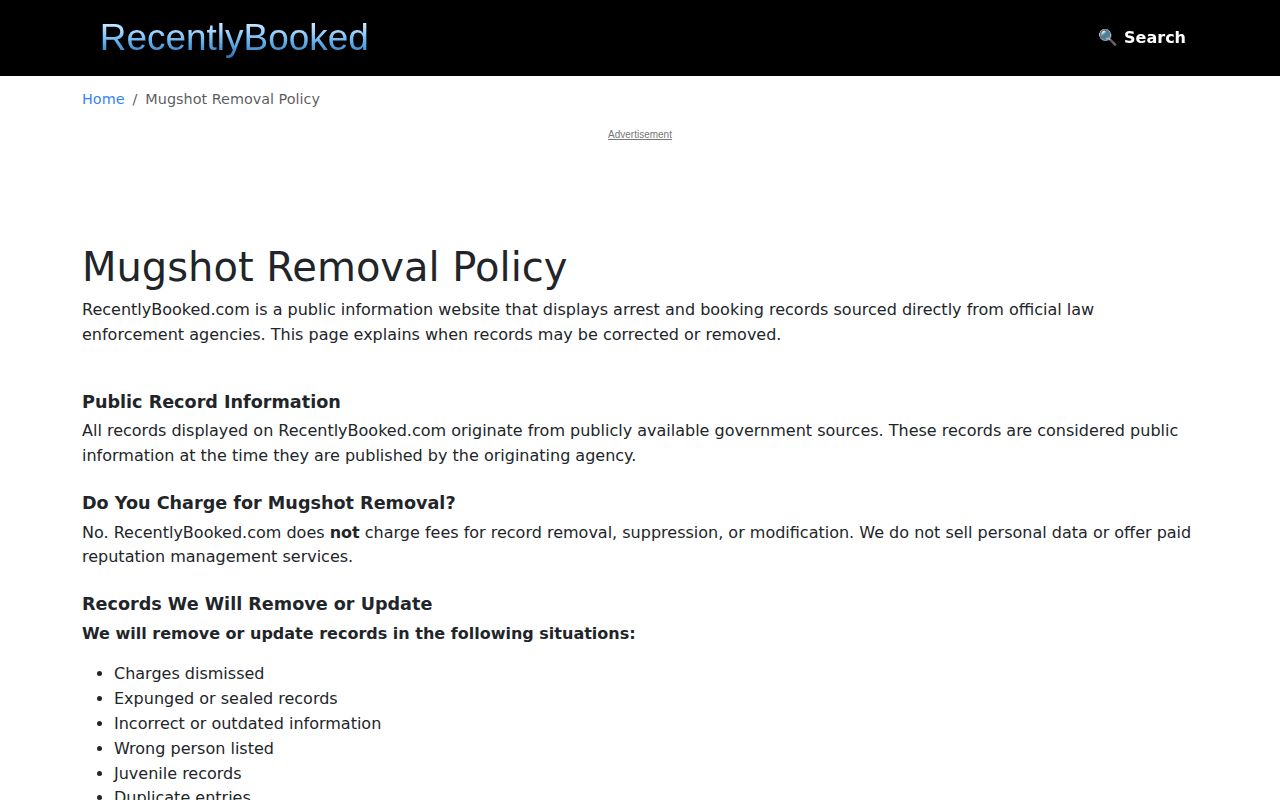
A Nevada sealing order binds only the custodians the court names. The agency's public page, its retained file, and any private copy exist separately. They can move on different clocks. The Arrest Records Law page lays out current sealing routes. It also notes which records stay with government agencies. The Mugshots.com Record Maintenance policy offers a free correction and removal path. That is a publisher policy, not a Nevada legal remedy. It controls nothing on other sites.
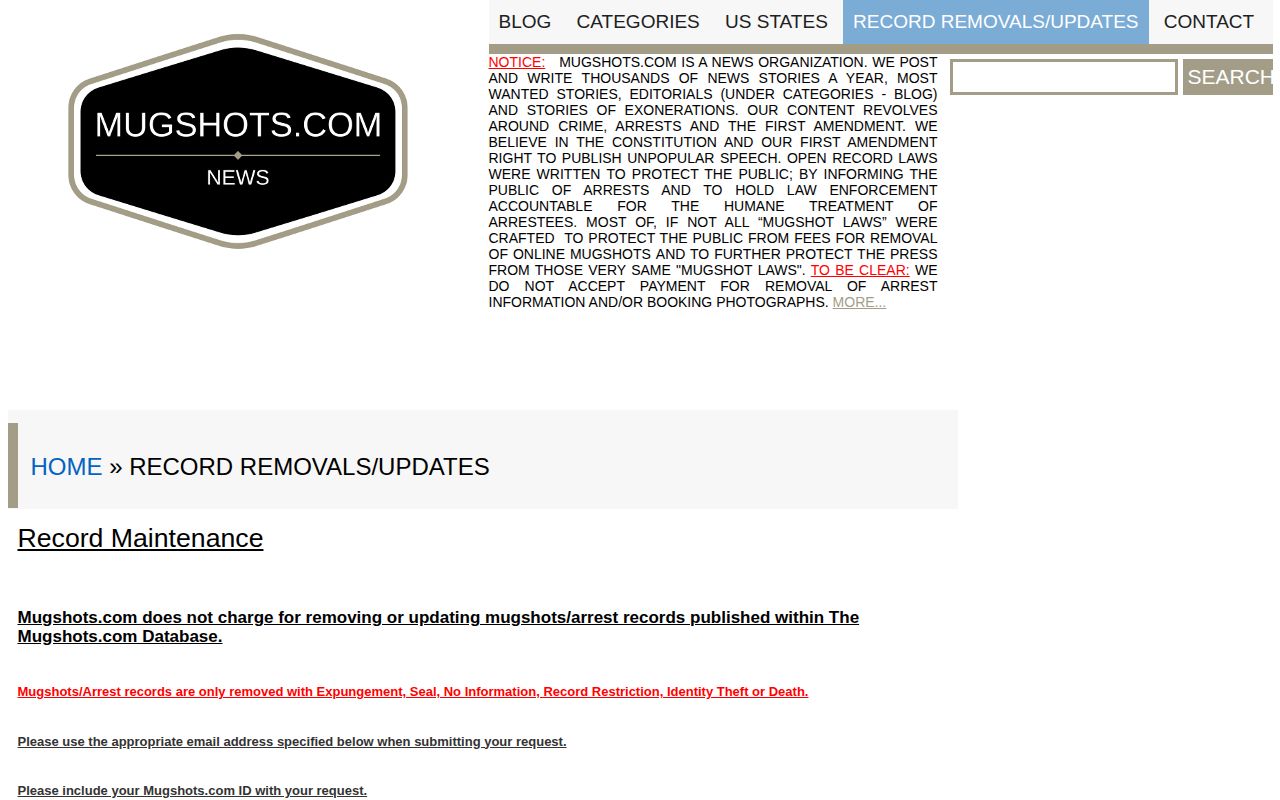
One publisher request clears no agency file, news archive, or rival private copy. Confirm legal status with the court or the government custodian first. Then follow each publisher's current policy on its own.
Nevada Booking Photo Policies
Nevada has no uniform rule for posting a booking photo online. Washoe's public-facing material has scaled back photos and personal identifiers after privacy and due-process decisions. Douglas County reporting says detainee photos were turned off. Nye County policy treats booking photos as records that may be released under the law. That policy alone does not prove a current web roster displays them. Many rural counties leave the public photo question open.
Three states need separating. A photo can sit in an agency file, be released after review, or appear on an online roster. One never proves the next. A missing image does not mean no arrest happened. A photo on a private page says nothing about currency. It does not prove a conviction either.
When a photo matters, ask the official custodian for its policy. Request the record by incident or booking details. Treat no third-party face card as a statewide roster, and assume no shared county rules. Official routes come before secondary indexes in the county-by-county directory.
Can one photo policy describe every county? No. A public-record rule, an agency's release decision, and a roster's display setting are separate questions.
Nevada Arrest Archives and Old Records
A public web page and an official record schedule answer different questions. The Nevada schedule lists an inmate roster kept 90 days after an update. A jail register is kept five years from its date. Release orders are kept three years after release. Inmate files are kept 85 years, or five years after a confirmed death, with historical review before disposal. That schedule dates to 2016. Agency schedules differ. Ask the records officer for the current rule before relying on any period.
A row can vanish from a current roster. A register or booking file can stay requestable. A private copy can persist after the government site drops it. A cached page is not proof the state still displays or endorses the record. For an older request, name the record type. Include the likely agency, date range, person if known, and format sought.
The Nevada State Archives also holds a restricted Nevada State Prison inmate-file series. It spans 1863 through 1972. That is not a complete or fully searchable statewide mugshot collection. Access can hinge on age and death-status rules. Confirm conditions, fees, and availability with State Records Services before any archive visit. The records-law page covers the state schedule and this archive route.
Note: The cited state schedule does not guarantee every county agency applies the same period to each record series.
Courts and Custody After Arrest
Nevada has no single public trial-court search. The Judiciary site links separate Supreme Court and Court of Appeals portals. CourtView serves many trial courts, while some independent courts run their own systems. The Nevada Judiciary lookup FAQ points to each route. Start with the court tied to the arrest. Then call its clerk if the case is missing online.
A jail record answers only the custody question. The court record follows the charges, hearings, pleas, and outcomes. Release from custody is not a dismissal. For Nevada state prison, use the NDOC Offender Search. It may show an offender photo when one exists. That is a later custody layer, not a fresh county booking feed.
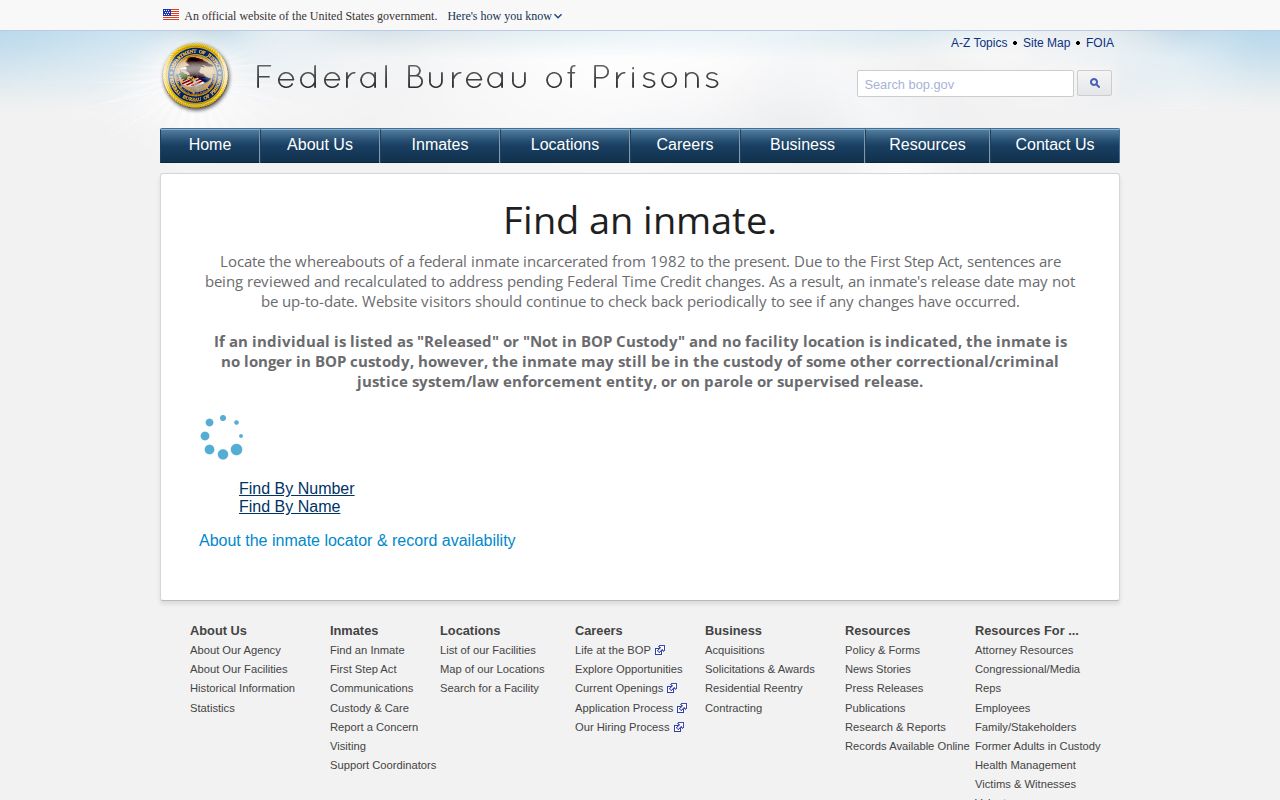
Federal custody is a separate track. The Bureau of Prisons locator covers federal prison records from 1982 forward. The BOP offers no public photo search. Immigration detention never appears on a Nevada county jail roster. For that, ICE's locator is the federal tool.
The Bureau of Prisons locator page presents the official federal search route. A county roster may drop a person after a transfer. Another custody system can still hold the later record.
Note: Verify the custody stage before comparing records; county booking, state prison, and federal detention systems do not share one roster.
Nevada Arrest Indexes and News
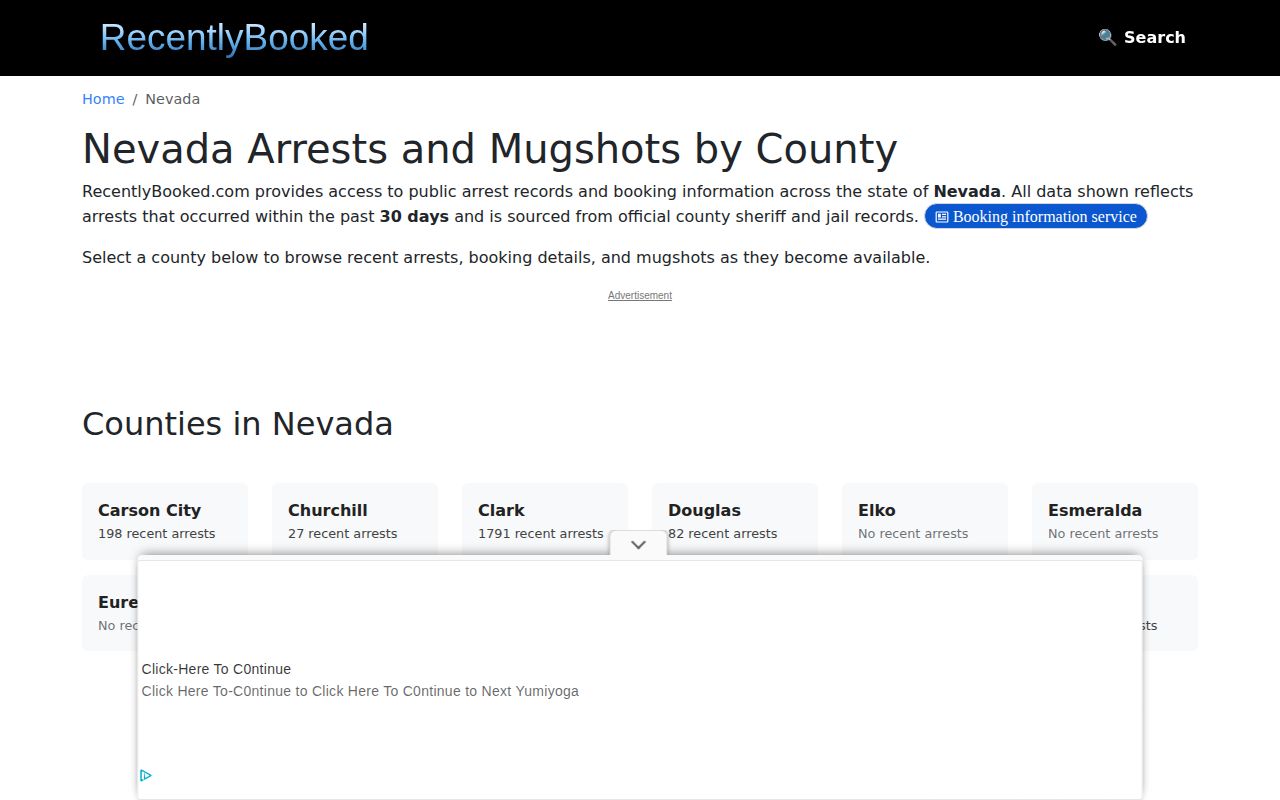
Private indexes sit outside the official record. RecentlyBooked groups Nevada counties by recent booking period, though its county list is partial and updates depend on its source. The state landing page is the hub. The RecentlyBooked Nevada index is not a complete roster. It is a secondary discovery aid, nothing more.
More secondary routes exist. Mugshots.com and Nevada Arrests.org both host arrest content. Busted Newspaper coverage across Nevada is uneven. Mugshots.zone runs a Nevada route too, easy to confuse with Nevada County, Arkansas. None of these sites holds Nevada's official booking record.
RecentlyBooked and Mugshots.com describe free correction or removal steps. They apply to some sealed, dismissed, or mistaken entries. Busted Newspaper lists no statewide free policy. Arrests.org offers a contact route but no free process. Mugshots.zone shows no Nevada booking-record opt-out. Private policies can change, and copies may linger on other hosts. Never copy names or photos from those pages into another list.
Nevada newsrooms add selected local coverage. Their ranks include the Las Vegas Review-Journal, Las Vegas Sun, 8 News Now, News 3, KOLO, Carson Now, The Fallon Post, The Ely Times, KELY, and the Lovelock Review-Miner. A story may run after the arrest. It may skip routine bookings, or use scene imagery instead of a booking photo. These outlets are editorial records, not jail feeds.
Note: Use a county agency for custody status, a court for disposition, and third-party news only as selected coverage to verify.