
Nevada Arrest Logs Have No Master List
The label "arrest log" covers several different records in Nevada. A county sheriff might list who is held right now. A city detention unit may do the same for its jail. Some sheriffs release selected arrest reports instead. Police departments post incident news on their own. Reporters then pick which cases to write up. Those channels overlap constantly. None adds up to a statewide booking timeline. The Nevada State Police Highway Patrol, part of the Department of Public Safety, posts selected traffic and incident material on its media page. Other public-safety notices come from DPS and the Nevada Joint Information Center public-alert archive. NHP publishes no daily public arrest or dispatch log, and these releases never replace the local booking record kept where a person was arrested.
A blotter entry is only one piece of a record. Dates, names, and locations still deserve a second check.
Fields in a Nevada Arrest Report
Nevada sets no standard blotter form. Counties publish what suits them. A sheriff's record, a press release, and a news story can each show different details for the same arrest. Use the fields below to tell what an entry actually describes.
| Entry detail | What it can tell you |
|---|---|
| Arrest or booking date | When the reported event or jail intake took place; these can be different dates. |
| Publication date | When an agency or newsroom posted the item, not necessarily when the arrest occurred. |
| Agency and location | Which department reported the event and which county or city handled custody. |
| Name and custody status | Identity and status only as shown at that time; a roster can change after release or transfer. |
| Charge or charge | The charge reported at booking or in a release. |
| Source or image label | Whether the item cites an agency record, a reporter, an incident image, or a booking photo. |
Some news blotters name the sheriff's office as their source. They may summarize a probable-cause report. Others give just a sentence or two. A headline's date range can refer to the incidents covered. The timestamp shows when the story ran. Treat a blank field as "not shown" rather than proof that no record exists.
Official Nevada Arrest Report Channels
Government records come first for custody questions. Nevada's counties and cities differ widely. Public access, refresh timing, and archive depth all vary from one jail system to the next. Because no statewide portal speaks for every facility, the County Directory routes you to the local jurisdiction.
| Source label | What it may provide | Limit |
|---|---|---|
| Official current custody | A county or city detention search for people held there now. | Not a complete multi-day arrest list; release or transfer can remove a person. |
| Official selected release | A sheriff, police, DPS, or NHP news item about a selected event. | Agency news is selective and may not list routine bookings. |
| Official dated recap | A report with a stated time window, if an agency publishes one. | A dated recap exists only where verified; it should not be inferred from a current roster. |
| Secondary blotter or news | A newspaper's account or searchable story archive. | Editorial coverage is not the official booking record or a complete roster. |
| No verified public feed | The reviewed sweep found no confirmed public log for that jurisdiction. | This means the feed was not verified, not that no arrest occurred. |
NHP news and a trooper's booking record answer different questions. A patrol release explains the highway incident. The receiving jail holds the booking entry. Start with that local roster for current custody. When an entry is older or missing, ask the booking agency's records unit for its report. Confirm which office holds custody before sending requests to several agencies at once.
Nevada News Blotters by Region
Regional news archives help where a county posts no steady public log. KOLO's crime section carries selected Washoe, police, and NHP stories. Its mix includes "24-hour plus" and weekend-style coverage. One caution applies. A newsroom may run a scene photo. It may also use an agency image instead of a booking portrait.
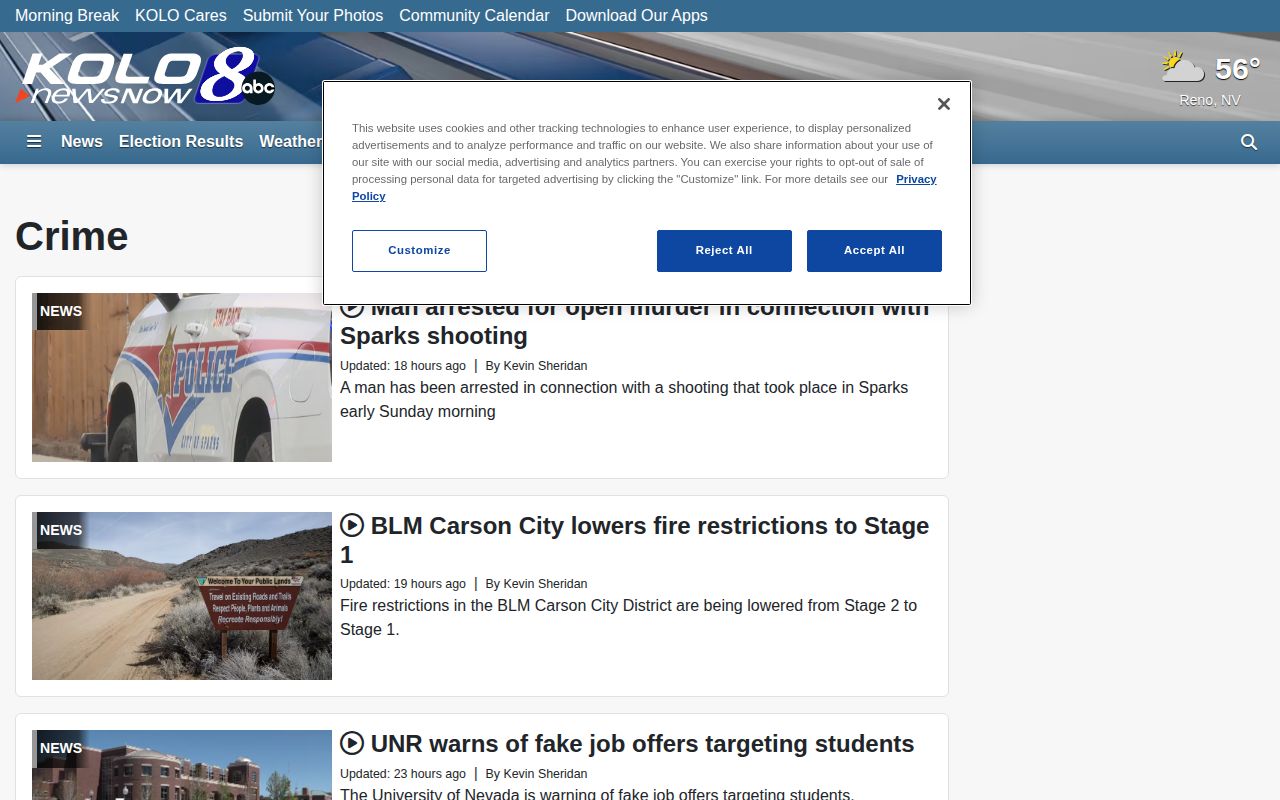
KOLO's crime page is a newsroom section, not a county booking search. It helps locate selected stories. It is no stand-in for a jail register. The Fallon Post's newsroom covers Churchill County and Fallon booking and public-safety news among its local reporting.
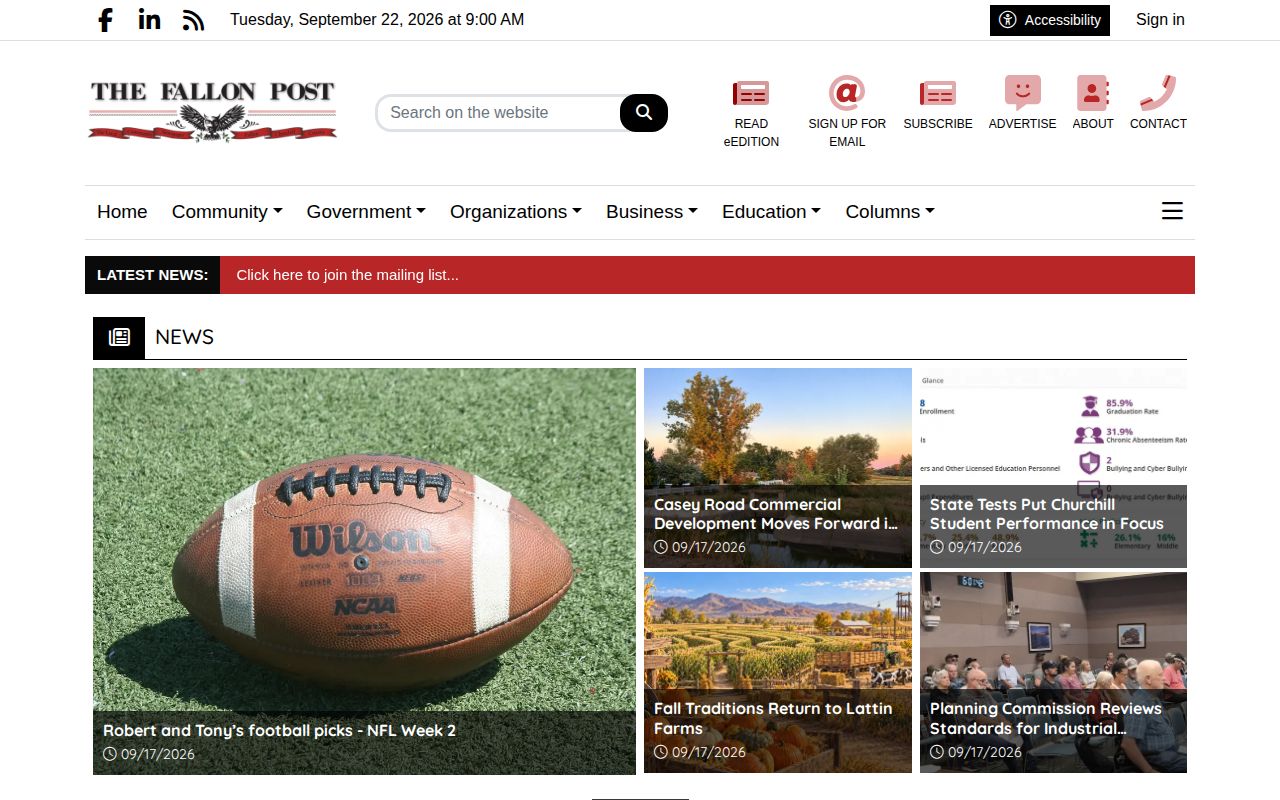
Think of it as an editorial entry point. It is not a daily list of every Churchill County booking.
Rural Nevada Arrest Blotters
Rural papers fill this role too. The Ely Times sheriff's police blotter runs sheriff-supplied details under its own article date.
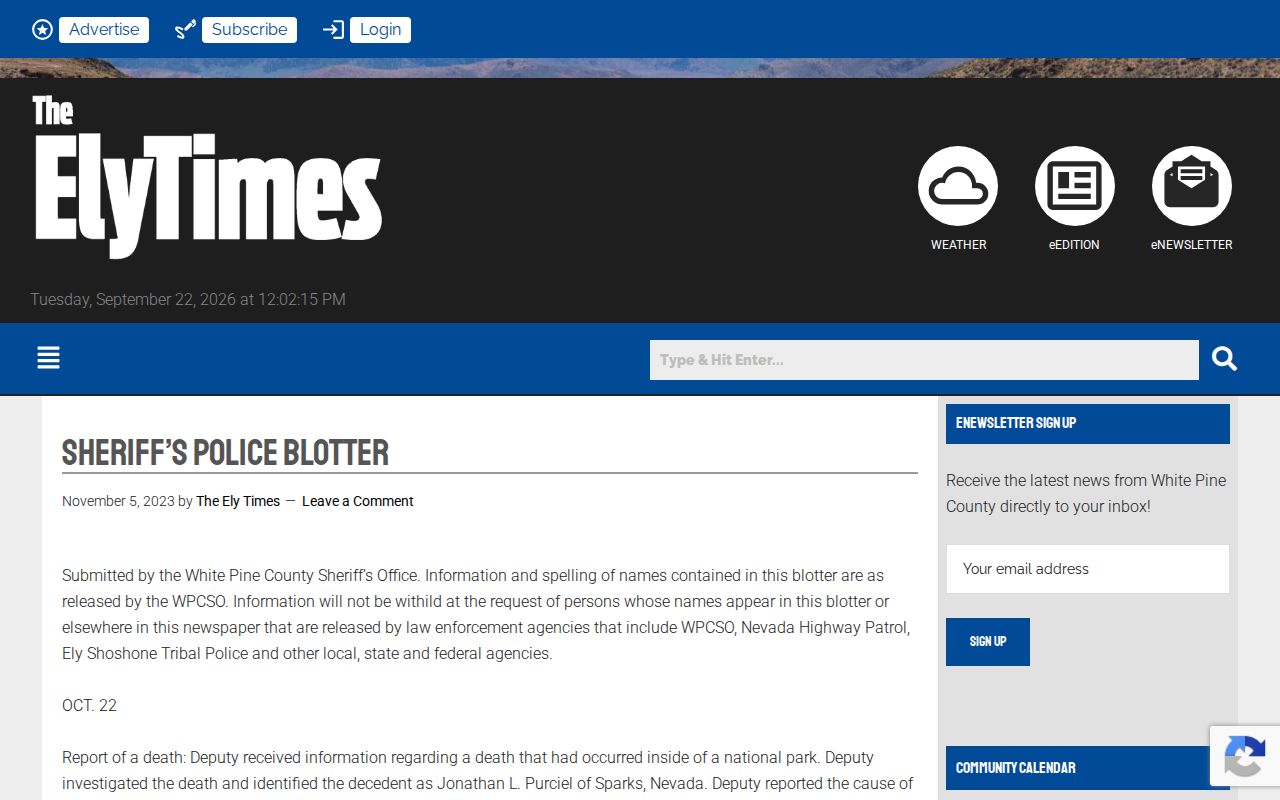
Dates still matter. An article's publication date differs from the arrest dates inside. The Lovelock Review-Miner's blotter offers a Pershing County example of a dated local booking report.
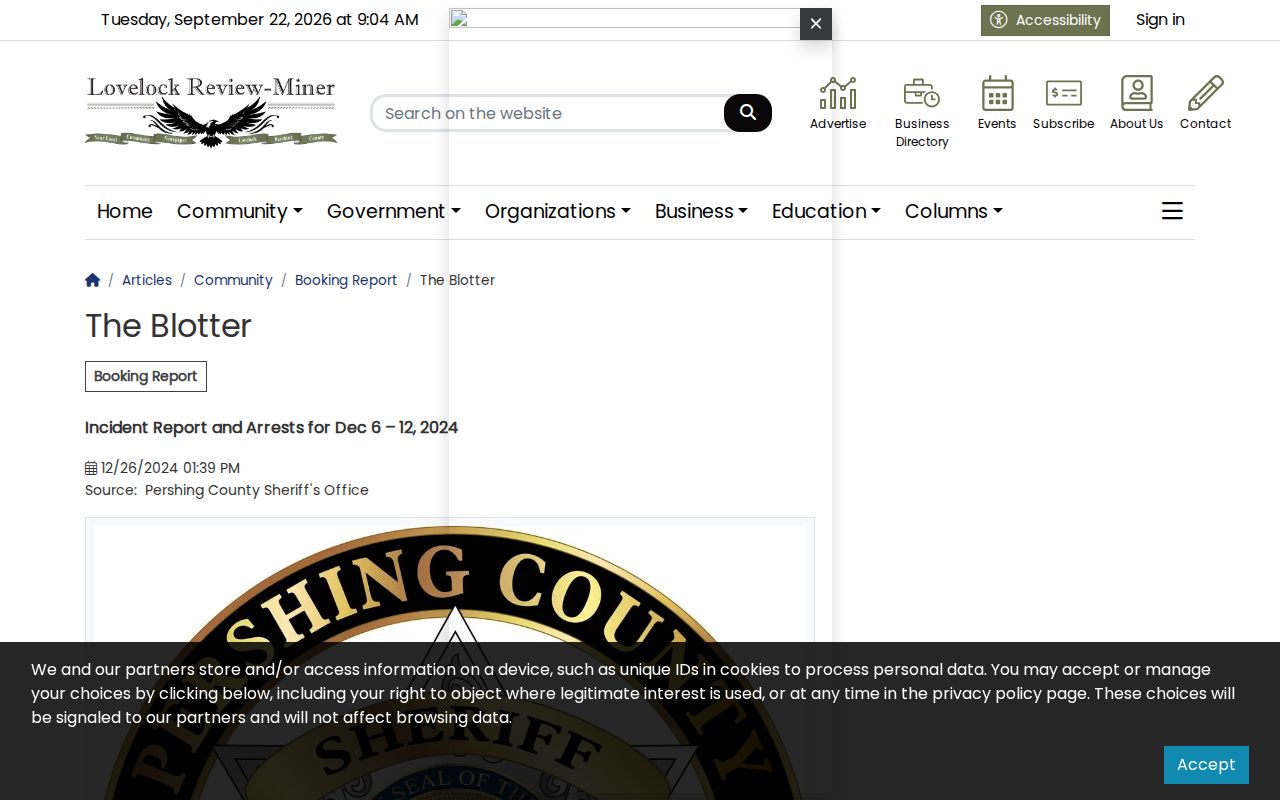
Other rural outlets include KELY, Elko Daily Free Press, Battle Mountain Bugle, Pahrump Valley Times, Mineral County Independent-News, and Silver State Chronicle. Their archives vary, and routine bookings may go unmentioned.
Arrest Dates, Posting Dates, and Status
Treat every date as a separate fact. A Monday story may cover arrests from Friday through Sunday, and its lead date won't match every booking inside. A custody search shows who is in the facility right then. It says nothing about who passed through earlier. A careful reading sequence keeps those records straight:
- Read the headline and the stated coverage window. Note whether it says a day, several days, or a weekend roundup.
- Find the article's posted or updated date, then locate any separate arrest, incident, or booking dates in the text.
- Check which agency supplied the details and which county or city received the person into custody.
- Use the official local custody page for present status, knowing a release or transfer may change the result.
- Use the court or records custodian for a case outcome or an older booking record; a news story does not supply every later update.
For an arrest that may have just happened, the same-day arrest landscape explains the limits of current custody views. It also suggests the next checks. A multi-day article is easier to find after a delay. It remains selected reporting, not a complete count.
Weekend Arrests and Holiday Roundups
Timing shapes what a roundup covers. Carson Now often posts its Carson City weekend or holiday booking roundup on the next business day, drawn from sheriff probable-cause reports. KOLO takes another path, grouping a longer window into one "24-hour plus" story. None of that binds every Nevada county or newsroom. It is just how two outlets work.
Weekend and holiday timing: A Friday arrest may miss a Monday story. A holiday roundup may lump several dates together. Check the named source and the actual dates before you treat any article as same-day coverage.
Custody can change faster than the coverage. Someone arrested may walk free before a later article circulates. The roster then clears. Yet the arrest report still sits with the agency. Old stories linger too, searchable long after the county drops a roster entry. Compare the source, the date, and the kind of record. No single result is the whole timeline.
Nevada Arrest Archives and Records Requests
A deep news archive is not the same as government retention. Carson Now's crime-log archive ran past 100 pages and several years. Impressive, but it is newsroom depth, not a full state index.
Nevada's retention schedule treats jail records differently by type. A roster may be kept just 90 days after an update. A jail register can run five years, and release orders three years after release. Inmate files stretch to 85 years. Another option is five years after a confirmed death, pending historical-value review. Schedules shift and vary by agency. Ask the current records officer what applies. A missing web row does not mean the record was destroyed.
An online blotter may stop short of the period you need. Go to the agency that made or holds the arrest record. Nevada's public-records law sets a response path under NRS 239.0107. Name the agency, the person if known, and the date range. Add the location and the record you want. That record might be an arrest report or a booking register. Request inspection or an electronic copy. Narrow requests help the custodian find the record. Ask whether a redacted version exists before you settle on a copy format. If it is no longer online, follow these steps:
- Identify the arresting department and the county or city facility that handled booking.
- Use that agency's public-records form or records-unit contact route and give a narrow date range.
- Ask for the specific record and an explanation if the office does not hold it or must redact part of it.
- Track the response: by the fifth business day, the agency must provide access, say it lacks custody, or give the earliest time it can respond while helping narrow the request.
Archive note: Government retention, a newsroom archive, and a private cached copy are separate records, each with its own custodian and access rules.